We used autumnal colours to wrap the gathered twigs, then started to wrap them together into branches to hang from the ceiling. We did this in an ordered manner to give a sense of flowing colours around the nest. We suspended them from the ceiling using hooks and fishing wire. The final touch came with the fairy lights which added a soft atmosphere and colour to the piece in the evening...
Tuesday, 20 November 2012
WRAPPING THE NEST, FONT BAR, FALLOWFIELD
This month we (a group of friends and I) were asked by the creative director of FONT BAR, Fallowfiled, Manchester to create a piece of textiles to sit in the back corner of the bar. As it is autumn, we decided to build a suspended, wrapped nest to create a warm, cosy feel to the table underneath.
Friday, 18 May 2012
Final Proposal
My final proposal is to create a movable and changeable exhibition screen in the form of digital tiles. The installation would originally show my Manchester inkblots which are based upon marks and memories that have been made in Manchester in the past, however the screen could then be used a single screen or multiple screens to show new students and staff artwork as marks they have made in Manchester.
Concentrating on the idea of interaction and change, I wanted the tiles to facilitate new patterns and marks being made from my designs which is why the tiles slide to change position on the wall.This way my original designs will never become stagnant or 'boring'. The movement will also allow variation for the digital exhibitions that can be uploaded onto it.
I think digital exhibitions could be a very new, exciting and practical way of students to show their work in a public environment. The art world will always hands on and traditional however it is becoming increasingly modern and digital and I think that this screen could help students to begin to show their work in a digital way, ready for their working careers.
As the screen would be of a substantial size and the tiles would be in large numbers, I needed to come up with a way to allow anyone to be able to move the screens interactively. This shows itself in the form of a smaller replica of the tiles lower down on the wall. These would be digitally connected to the working tiles and act like a sliding puzzle remote. For example when you move a tile on the remote, the corresponding larger tile would move on the wall above. I think this is an easy, simple and fun way of interacting with the screen.
The screen could be installed inside the new building in a large space such as the reception. However, I think a better idea would be to have it on the large blank wall on the side of the new art school so that the public could see the work as well.
I wanted my final design to be new, exciting and useable and I think that the PIXEL SCREEN achieves this.
Mechanics and Movement
I have been deliberating a number of methods to allow the tiles to move and to allow the students and staff to rearrange them as they wish. One method that grabbed my attention was that of a children's sliding puzzle. I like the simple design of these toys and the simple movement of the tiles within. I think it would be great to use these movements and methods for my tiled installation and it is a wonderful notion to think that such amazing and complicated patterns could be made from such simple actions.
I wouldn't take on all aspects of the sliding puzzle though as this could be too restrictive. For example I wouldn't use the square shape and frame, instead opting for a wall system which allows the tiles to cover a larger area and also allow them to move to create unusual and unrestricted shapes.
Making Patterns With Pixels???
Interactivity in my project is very important and I'd like the new students to be able to create different patterns with the final installation.
However I'd love the imagery to be changeable as well, and I think it would be a great idea to allow students to showcase their own work on the installation as part of the ever changing new art school. Therefore, instead of the tiles being made of glass or resin with the imagery trapped inside, as I had originally planned, the tiles will now be digital with the ability to move and have imagery uploaded onto them.
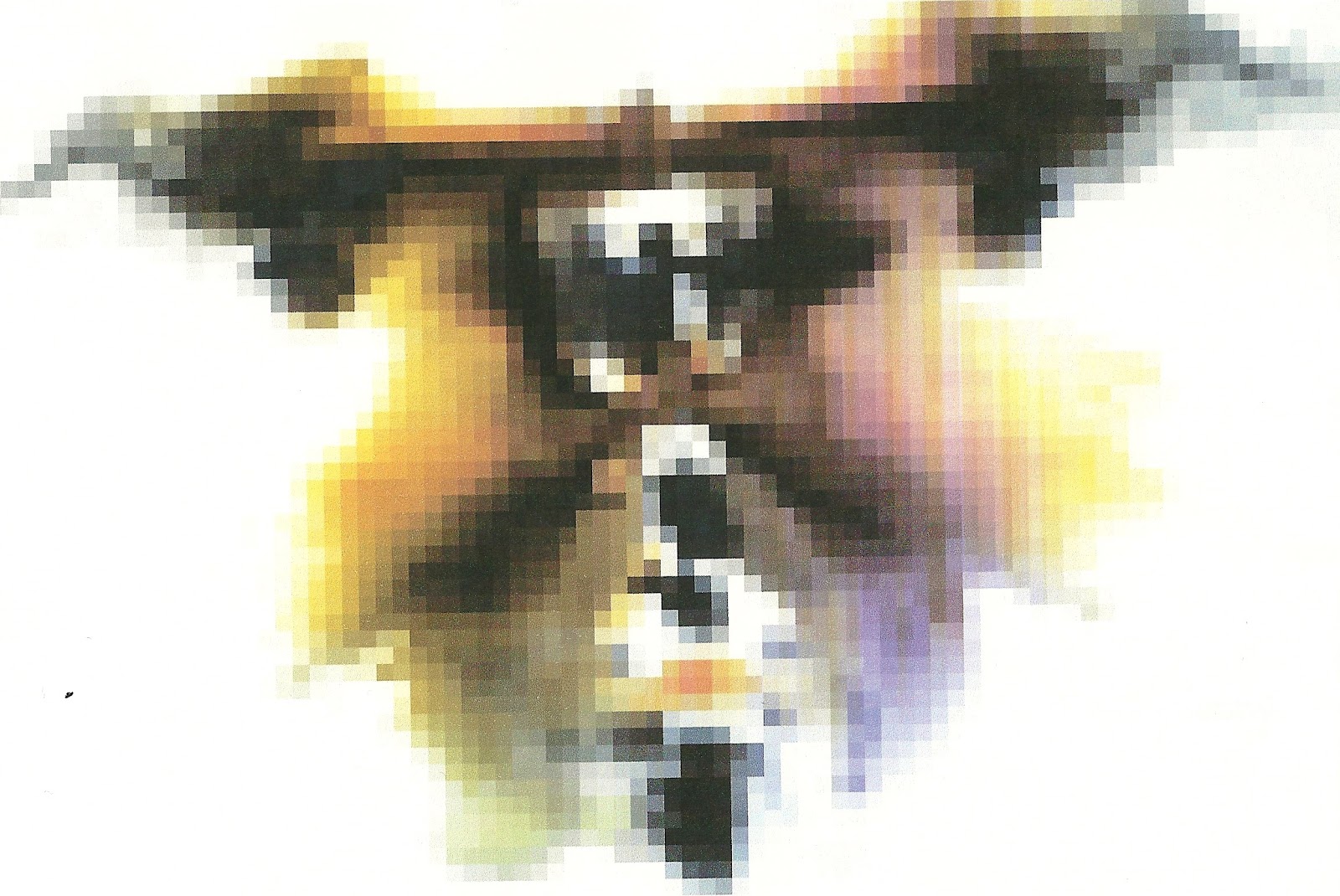
I've been playing around with my Manchester inkblot images to see what kind of patterns can be made with them in 'tile form'. Because the original images are made with inks, the patterns and marks which become apparent are soft and delicate but also strong in colour which i love! The images could change at regular intervals with the different inkblots I've created until a student books the screens to exhibit their work for an amount of time.
Wednesday, 9 May 2012
A CHANGE IN DIRECTION???
After a lot of editing and creating patterns with my inkblot images on photoshop, I've decided to use my images separately as the patterns seem to be taking away from the original features and textures. I have also decided I want my project to involve the new users of the building and for the outcome to be interactive so I'm now focusing my efforts on moving images and patterns. Maybe the tiles could be moved so that individuals could create their own patterns with my Manchester inkblots??? I would like my design to be constantly interesting and changing rather than static and I think this might be a way to move towards that criteria. Another point I have been discussing with myself is pixilation of my inkblots.
This may allow me to use my images on a larger scale in my final design. It also suggests the use of square tiles which fits in with my project very well.
Subscribe to:
Posts (Atom)