Friday, 18 May 2012

Mechanics and Movement

I have been deliberating a number of methods to allow the tiles to move and to allow the students and staff to rearrange them as they wish. One method that grabbed my attention was that of a children's sliding puzzle. I like the simple design of these toys and the simple movement of the tiles within. I think it would be great to use these movements and methods for my tiled installation and it is a wonderful notion to think that such amazing and complicated patterns could be made from such simple actions. 


I wouldn't take on all aspects of the sliding puzzle though as this could be too restrictive. For example I wouldn't use the square shape and frame, instead opting for a wall system which allows the tiles to cover a larger area and also allow them to move to create unusual and unrestricted shapes.


Making Patterns With Pixels???

Interactivity in my project is very important and I'd like the new students to be able to create different patterns with the final installation.


  However I'd love the imagery to be changeable as well, and I think it would be a great idea to allow students to showcase their own work on the installation as part of the ever changing new art school. Therefore, instead of the tiles being made of glass or resin with the imagery trapped inside, as I had originally planned, the tiles will now be digital with the ability to move and have imagery uploaded onto them.
I've been playing around with my Manchester inkblot images to see what kind of patterns can be made with them in 'tile form'. Because the original images are made with inks, the patterns and marks which become apparent are soft and delicate but also strong in colour which i love! The images could change at regular intervals with the different inkblots I've created until a student books the screens to exhibit their work for an amount of time.

Wednesday, 9 May 2012

A CHANGE IN DIRECTION???

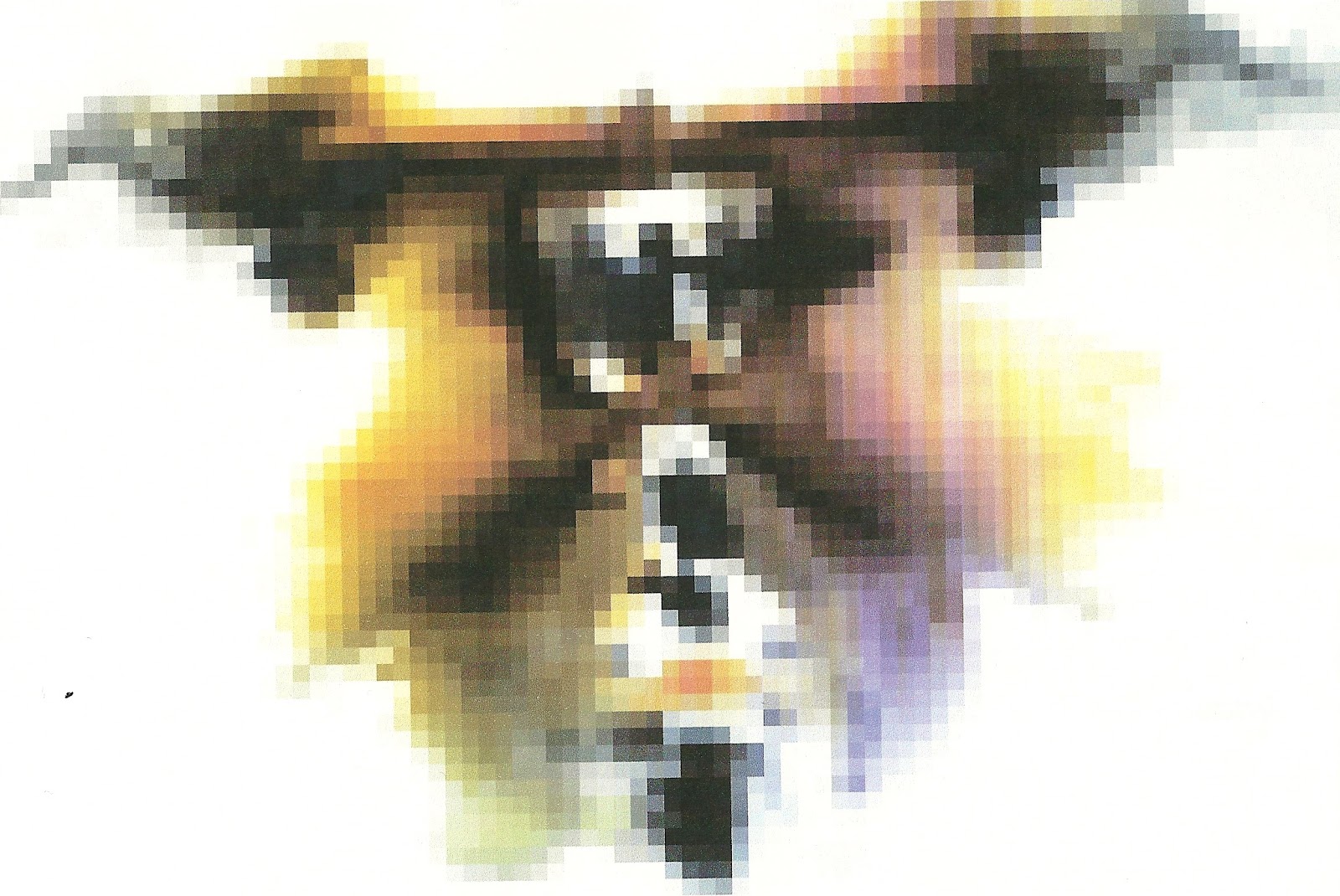
After a lot of editing and creating patterns with my inkblot images on photoshop, I've decided to use my images separately as the patterns seem to be taking away from the original features and textures. I have also decided I want my project to involve the new users of the building and for the outcome to be interactive so I'm now focusing my efforts on moving images and patterns. Maybe the tiles could be moved so that individuals could create their own patterns with my Manchester inkblots??? I would like my design to be constantly interesting and changing rather than static and I think this might be a way to move towards that criteria. Another point I have been discussing with myself is pixilation of my inkblots. 


This may allow me to use my images on a larger scale in my final design. It also suggests the use of square tiles which fits in with my project very well.

MODULE H

'Module H' is a wall hanging system design by Shigeru Ban in association with Hermes. The design comprises of an aluminium mesh with crafted leather/fabric tiles. The shape and form of the tiles can be chosen by the client therefore creating their own design. The mesh can be used as a room divider, a wall covering or a ceiling covering! I think this idea is brilliant and I love that the 'artwork' is left to the client to decide upon. This sort of flexibility and interaction is something I would like to develop within my project.

Tuesday, 8 May 2012

CV

Danusha Komar –CV
EDUCATIONAL CAREER
GCSEs- 12 GCSEs grades A* to B
AS Level- Art A, Design B, Photography B, Sociology A
A Level- Art A, Sociology B, Design C
 Art Foundation Year (Manchester Metropolitan University) – Merit
Degree- BA Textiles in Practise (Manchester Metropolitan University) – 2011-2014
WORK
JD Fashion Group Plc – October 2010- present
Part time Senior Sales Assistant.
As a senior sales assistant in the Adidas Originals shop in the Trafford Centre, I am in charge of my own section and staff on a regular basis on weekdays and on busy weekends. I am in charge of dealing with customers’ queries, managing staff and merchandising, which involves my creative skills as an artist/ designer. This means making sure that new or high selling lines are of prominent place in the shop and also making sure that the colour ways match and that the shop is looking its best at all times. It has also helped me to develop my interpersonal skills and time management.

ABOUT ME
I have always loved art and design from an early age and I have always been around art as my mother is an artist herself. For my GCSEs I chose as many art and design based subjects as possible which included an extra after school GCSE: Textiles. I gained A*s to As in all of my art based subjects (Art, Textiles, Design). Similarly in my AS Levels I chose to do an extra in the form of Photography. I gained a B in my Photography AS and it taught me techniques and methods a normal art A level could not.
I enjoyed my foundation thoroughly and it helped me to decide which particular area of art and design I wanted to go into (textiles). I also found during this time that I love to bounce ideas off other people and to work with other people to come up with new exciting ideas. I enjoyed my foundation at MMU so much that I decided to stay for my degree. I chose the BA Textiles in Practise degree because I thought it would give me a wide base of textiles skills and allow me to keep my options open as to which specific discipline I would finally go in to. So far the course has given me all of these things and my skills in many areas such as weaving and print have developed and are still developing. The course is big so I can carry on bouncing ideas off people and gaining new experiences every day.
MY INSPIRATIONS
I take inspiration from many aspects of life however my work tends to veer towards past movements and subcultures and peoples mental health and state of mind. For example I recently did some work based on the Hacienda and the Factory movement in 1990s Manchester for which I created both prints and weaves. I have in the past used natural world inspirations which I have enjoyed also.
MY WORK
My work tends to focus on colour and excitement. I love to combine colours to create eye-catching pieces and designs, mainly for fashion however some of my work could be used for interiors. I am not set on one particular discipline however I love to use weaving and print as the colours and effects I can create lend well to my work.
CURRENT WORK
I am currently doing work about inkblots and marks related to Manchester for Unit X in which I am to produce a piece of work for the new Art school building. I am choosing to make my design interactive as I want people to be able to create art work with it. This has been challenging however it has also been exciting and a great chance to learn about art projects outside of university and to network with other people.
REFERENCES
Tony Radcliffe- MMU foundation, Grosvenor Building, Oxford Road.
Kate Egan- MMU BA Textiles in Practise course leader.
Peter Harding- Manager, JD Sports Trafford centre.

Wednesday, 25 April 2012

TIMOROUS BEASTIES


I discovered Timorous Beasties last year whilst on my foundation but have found that I have come back to them time and time again for inspiration. Taking inspiration mainly from the natural world, they create amazing unique and modern designs sometimes however harking back to classic print designs such as their well known 'Glasgow Toile'.
  
Most of their designs have a hand drawn quality to them that I love and even though some finished products are digitally printed, they still use the 'hand made', screen printed method which I think sets them apart from many other design houses.


In June 2011 they embarked upon a project to create window coverings for the inside of Stratford Market station in East London to provide privacy in parts of the building. They used their 'Tree Of Life' design on clear vinyl for the finished product.
This could be an area of further investigation for my work as the new build houses a lot of glass and this is a contemporary and fun way of giving privacy to areas in and around buildings.

6 IMAGES- my project so far...

We were given a task to sum up our work so far using only 6 images in the hope that it would help us analyse our project critically. 


To showcase these images I decided to make a concertina artists book with the 6 images/pages that I think have played the biggest part in my project's development so far.
I think this helps to show clear thought processes and it also helps to make decisions about the next steps of my project.